Jihad Remark Rocks Parliament: Nadvi’s Words Trigger Massive Political Storm

Nadvi’s Jihad Remark Sparks Heated Clash in Lok Sabha
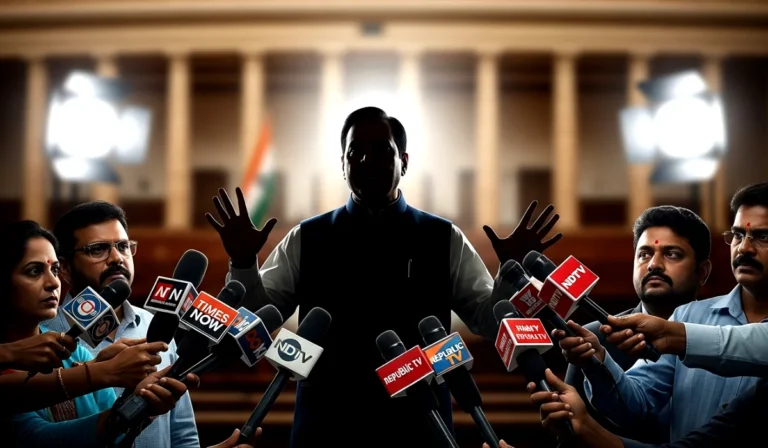
The Lok Sabha turned into a battleground of words this week after Rampur MP Kunwar Danish Ali Nadvi used the word jihad while questioning the government’s Waqf digitisation drive. What should have been a routine discussion on technical delays suddenly escalated into one of the most fiery exchanges of the session, drawing reactions from every corner of the political spectrum.
A Debate That Went Off Track
Nadvi stood up during the debate on the Waqf Amendment Act 2025 and claimed that the government’s new UMEED portal was struggling to function. According to him, server crashes and system failures had slowed down the process to a crawl, leaving only 30 percent of mosques, madrasas and graveyards uploaded despite six months of effort.
In a charged tone, Nadvi told the House, “People are frustrated. They feel the system is failing them. When a portal keeps crashing again and again, it does not look like a technical flaw anymore. It feels like a push that hurts our religious rights. Many are calling it a silent jihad against the community.”
The moment he used the word jihad, the entire House erupted. Members who were earlier quietly listening suddenly shot up from their seats. The ruling party reacted instantly and forcefully.
BJP Hits Back, Calls Remark Dangerous
BJP MP Manoj Tiwari led the counterattack, accusing Nadvi of turning a policy discussion into a communal flashpoint. His words were sharp and clear. “This kind of language is reckless. You cannot use such sensitive words inside Parliament to provoke people. It is not criticism. It is a calculated attempt to create fear,” Tiwari said.
He demanded that the remark be removed from the official record and that Nadvi face strict disciplinary action. Several other BJP MPs endorsed his demand and stated that Parliament should not become a platform for emotional outbursts that divide communities.
Even Muslim Voices Criticise Nadvi
Perhaps the most striking reaction came from political commentator Tehseen Poonawalla. Known for his support of minority issues, even he criticised Nadvi. Poonawalla wrote online, “We can question the government without using words that escalate tensions. There is no need to bring jihad into a debate about a digital portal. It weakens the argument and strengthens polarisation.”
His comment surprised many observers because it showed that Nadvi’s choice of words had crossed lines even within his own community.
The Real Issue Behind The Noise
Lost under the political storm was the actual issue Nadvi wanted to highlight. The UMEED portal, launched to digitise all Waqf properties, has indeed faced difficulties. Several opposition MPs confirmed that many states are struggling to upload old records, maps and legal documents because the portal often slows down or crashes during peak usage.
A senior MP privately said, “You cannot expect centuries of land documents to be digitised in a few months. Many records are handwritten, damaged or disputed. The system needs more time and better planning.”
Under the Waqf Amendment Act 2025, all states must complete digitisation by December 5. Critics say the deadline is unrealistic. Supporters argue that transparency cannot wait any longer.
Government Says Portal Is Stable
The Ministry of Minority Affairs responded swiftly to the controversy. Officials said the portal is functioning smoothly and that only minor issues have been reported. They insisted that delays are happening because of slow verification at the state level, not because of faulty technology.
One senior official told reporters, “The portal is stable. We are assisting state teams daily. Most of the backlog comes from incomplete or disputed documents, not the portal itself.”
Still, independent experts say the government should conduct a full audit to determine whether the system can handle large data uploads without crashing.
65+ free tools must visite
Political Heat Overshadows Technical Concerns
Inside Parliament, the debate soon shifted from digitisation to Nadvi’s remark. Members debated whether the word jihad was used metaphorically or provocatively. Some MPs argued that Nadvi should apologise, while others defended his right to express frustration.
Nadvi refused to withdraw his statement, saying, “I used that word to describe intensity, not enmity. People feel cornered because the system is failing.”
His refusal ensured that the controversy would not die down quickly.
What This Means For The Waqf Act Rollout
The uproar could delay discussions on improving the portal or extending the December 5 deadline. With political temperature rising, both sides appear more focused on scoring points than solving the underlying issue.
Analysts believe the digitisation of Waqf properties is necessary, but the government must communicate more clearly and address server-related complaints before tensions escalate further.
The episode also shows how a single word can overshadow a complex issue, shift public attention and create divisions that were not originally part of the debate.
The Road Ahead
For now, the government faces pressure to prove the portal is reliable, while the opposition is likely to amplify concerns about fairness and technical readiness. Nadvi’s remark has added emotional weight to an already sensitive debate, and unless both sides shift the discussion back to policy, the controversy may continue for weeks.
The incident is a reminder that Parliament is not just a place for laws but also for battles of perception. And sometimes, one word is enough to ignite a fire that takes much longer to extinguish.