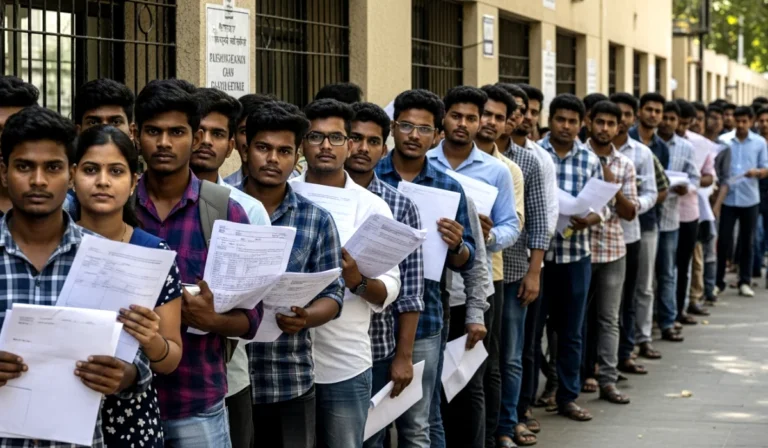
Zoho’s Bold Move: “No Degree Needed” Teen Hiring, Skills Over College

When a major Indian tech company removes the college-degree requirement, it sends a strong message: your skills matter more than your certificates. That is exactly what Zoho Corporation’s CEO, Sridhar Vembu, said recently. He made it clear that “at Zoho, no job requires a college degree.”
He even highlighted a new trend — teenagers getting hired early — and urged parents to stop treating a degree as the only path to success.
Read Also :MS Dhoni Surprises Students With Powerful Message
For decades, Indian students have rushed from school to coaching centres and then to college. But Vembu believes a skills-first era has started, and Zoho wants to lead that change.
A New Way of Hiring
Vembu explained that many smart students in the U.S. are skipping college and moving straight into tech jobs. He mentioned programs where 18-year-olds start working on real projects right after high school.
He told Indian parents to pay attention because the world of work is changing fast.
Inside Zoho, the hiring rules already reflect this shift. If a manager posts a job that demands a degree, HR steps in and asks them to remove it. Vembu said he wants every applicant to be judged on skills, not certificates.
He also shared that the team working with him in rural Tamil Nadu has a median age of just 19. “Their energy is infectious. I have to keep up with them,” he joked. This shows his confidence in young, self-taught talent.
What This Means for Students and Parents
If you are studying today, or raising a child, this is a big shift.
- Less pressure to chase a degree.
Not getting into a top college no longer means your career is over. - Skills become the real currency.
Coding, design, writing, analytics and problem-solving matter more than marks. - Education costs come under question.
Vembu has often warned about student debt and said, “Education without skills is expensive.” - Hiring becomes more diverse.
Companies may discover brilliant talent from rural areas, small towns and non-traditional backgrounds.
However, there are concerns too. Parents fear that skipping college means losing exposure, networks and backup options. Companies also have to make sure young recruits receive good training so they can grow and not feel lost.
Why Zoho Is Making This Move
Zoho’s approach is driven by several realities:
1. Talent shortage
Tech companies around the world need fresh, adaptable talent. Degrees alone don’t guarantee that.
2. Hiring for potential is cheaper
A self-taught teen may be more creative — and less costly — than a degree-holder with no real skills.
3. Larger talent pool
Recruiting teens, rural youth and non-graduates opens doors to new ideas and diverse experiences.
4. Strong brand identity
“Skills first” positions Zoho as a modern, bold and inclusive company.
But There Are Challenges
This model has risks:
- Higher training needs: Young recruits need guidance and mentorship.
- Perception issues: Some people may feel the value of education is being undermined.
- Execution problems: Companies must ensure fair growth for non-degree hires.
- Client expectations: Certain industries still prefer credentialed workers.
Vembu acknowledges these concerns. He repeatedly says that the real investment should be in talent and motivation, not in degrees that don’t come with real skills.
What Students Should Do Now
If you are thinking about your future, here’s a simple roadmap:
✔ Focus on basics
Learn coding, communication, design thinking and digital tools.
✔ Build real work
Make a portfolio. Join open-source projects. Freelance. Create something.
✔ Stay curious
Don’t stop learning after one course or job. Build habits, not shortcuts.
✔ Choose wisely
A degree is still valuable depending on the field. Medicine, law and research still require formal education.
The point is: you have more choices than before.
Final Thoughts: India’s Work Culture Is Changing
What Zoho is doing is bigger than one policy change. It may reshape how India thinks about education, youth and opportunity.
If companies start valuing what you can do more than what degree you hold, the workforce becomes wider, fairer and more dynamic.
But for this to truly help young people, the entire ecosystem — schools, parents, training centres, and employers — must adapt.
The message is simple:
Your future is no longer defined by the college you get into.
It is defined by the skills you build, the projects you create, and the curiosity you keep alive.
For the generation entering the workforce between 2025 and 2030, adaptability may matter more than any classroom seat.