IndiGo Flight Chaos: Over 1,000 Cancellations Shake India’s Skies After New Pilot Rest Rules
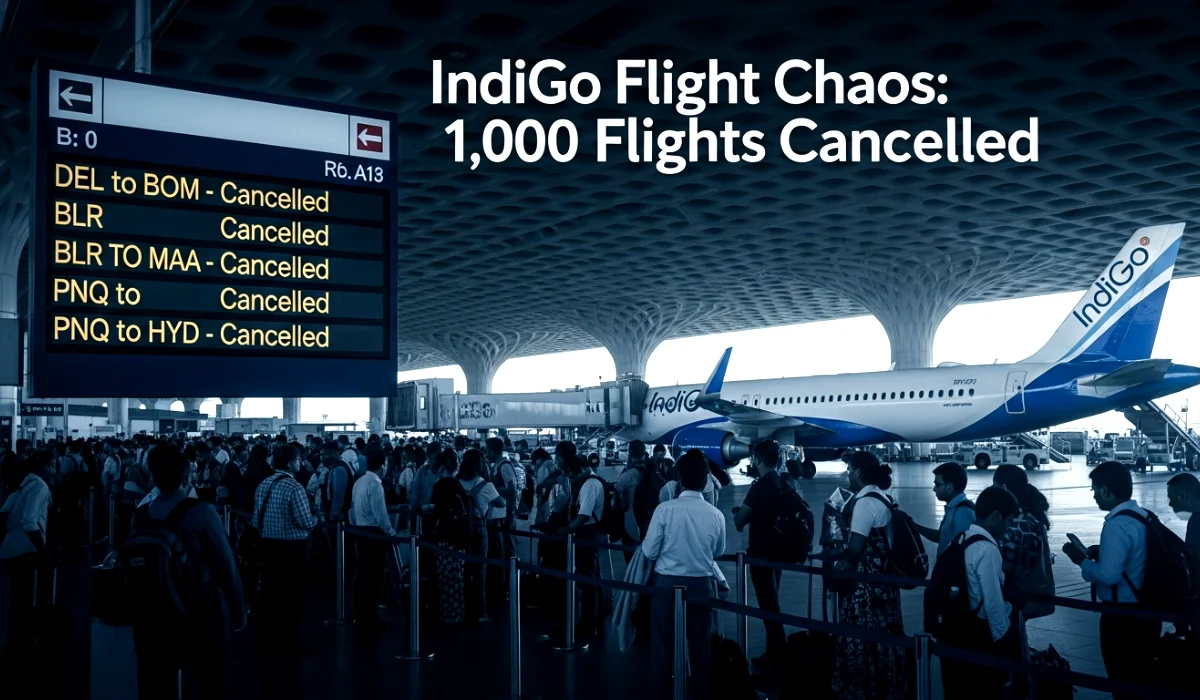
Indian skies witnessed a rare moment of turbulence this week as IndiGo, the country’s largest airline, canceled more than 1,000 flights due to a sudden crunch in pilot availability. The root of the disruption was not weather or technical failure but a fresh set of rules designed to protect pilots from fatigue. The new regulations forced IndiGo to redraw its entire crew roster, and the impact spilled heavily onto passengers.
The scene at airports across Delhi, Mumbai, Bengaluru, and Hyderabad looked almost surreal. Long lines, anxious faces, rising fares, and social media flooded with complaints. For an airline that prides itself on punctuality and efficiency, this setback came like a bolt from the blue.
Why Did the Crisis Happen?
The turning point was the DGCA’s updated crew rest policy. The rules, phased in since January 2024, were meant to make flying safer for both pilots and passengers. But the implementation collided with IndiGo’s packed schedule.
Key changes under the DGCA rules:
- Weekly rest increased to 48 hours, giving pilots more downtime.
- Night duty restrictions tightened, allowing only two night landings per crew in a defined duty period.
- Stricter limits on cumulative work hours, especially during red eye flights.
- Mandatory buffer between long haul and short haul rotations, reducing rapid shift changes.
A senior IndiGo pilot explained the ground reality clearly.
“We were already operating at maximum capacity. The new rules meant our rosters needed a complete overhaul. Without enough trained captains for certain routes, cancellations were unavoidable.”
The airline tried to adjust quietly at first. But as the week progressed, minor delays snowballed into major disruptions.
How Passengers Were Hit
The sudden wave of cancellations created a ripple effect across the entire aviation network.
Passengers faced multiple challenges:
- Flights canceled with little advance notice.
- Long queues at airline counters for rebooking.
- Last minute fares on rival airlines skyrocketing.
- Families stranded overnight without clear updates.
- Passengers juggling hotel stays, refunds, and urgent commitments.
One passenger from Pune shared his frustration online:
“I reached the airport at 6 am only to learn my flight was scrapped. The next available ticket was priced like an overseas trip. This is not normal.”
The sentiment echoed nationwide. Even travelers who managed to catch alternate flights found themselves paying significantly more.
Why did fares rise so fast?
- High sudden demand for limited seats.
- Air India, Akasa, and Vistara struggled to add capacity instantly.
- Peak travel season added extra pressure.
- IndiGo’s 60 percent market share meant any disruption stretched the system thin.
How IndiGo Responded to the Crisis
Realizing the magnitude of dissatisfaction, IndiGo’s leadership addressed the public directly. CEO Pieter Elbers released a video message expressing regret and explaining the situation.
IndiGo’s support measures for passengers included:
- Full refunds for canceled flights without extra paperwork.
- Free date changes for all affected tickets.
- Hotel accommodations for those stranded overnight.
- Meal vouchers at select airports.
- Waiver of additional fees for certain rebookings.
Elbers said, “The last few days have been extremely tough for our customers and our teams. We are doing everything possible to stabilize schedules and return to normal operations.”
The apology helped settle some nerves, but passengers continued demanding faster communication and more transparency.
DGCA Steps In With Temporary Relief
Sensing the scale of nationwide disruption, the DGCA provided a temporary exemption until February 2026, allowing the airline greater flexibility in applying night landing limits.
The exemption aimed to:
- Reduce immediate pressure on pilot rosters.
- Offer airlines a transitional period to recruit and train more crew.
- Help restore the flight schedule to normal faster.
With this regulatory breathing space, IndiGo began reinstating flights steadily through the week.
The Bigger Picture: What This Crisis Reveals
While the uproar may fade in a few days, aviation experts believe the situation exposes structural cracks.
Key takeaways for India’s aviation sector:
- Pilot fatigue is a real concern that needs long term solutions.
- Airlines must expand their pilot pipeline, especially for night and international operations.
- Crew planning should adapt faster to regulatory changes.
- Passenger communication needs serious improvement, especially during disruptions.
- India’s booming air travel demand requires stronger backup systems.
An aviation analyst noted, “This was not just an IndiGo issue. Any airline running such a tight schedule would have faced the same outcome once the rules tightened.”
What Happens Next
IndiGo has already resumed a majority of its grounded routes, and normal operations are slowly returning. However, experts warn that similar disruptions could reappear if airlines fail to strengthen manpower planning.
Passengers, meanwhile, are hoping the worst is over. With the festive travel season approaching, airlines will be under pressure to avoid another meltdown.
For now, the message is clear. A small shift in crew rest rules shook the entire aviation ecosystem. The incident might just push Indian airlines to rethink how they balance safety, efficiency, and human limitations in the months ahead.