Rahul Gandhi Accuses Modi Government of Blocking Foreign Leader Meetings

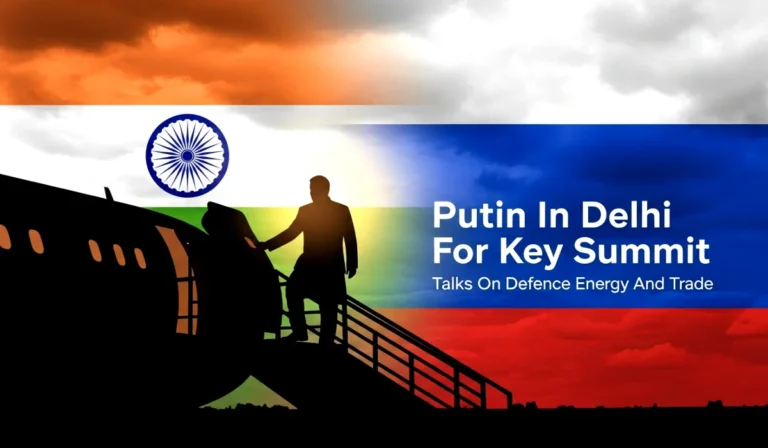
Rahul Gandhi has once again turned up the political heat in Delhi, claiming that the Modi government has been quietly discouraging foreign leaders from meeting him. With Russian President Vladimir Putin expected to land in India soon for the annual India Russia Summit, the timing of the allegation has triggered fresh discussion on how the Opposition is treated in matters of diplomacy.
Speaking to reporters, Gandhi offered a sharp comment that immediately caught attention. “A confident government does not fear conversations. But what we see today is a government that gets uncomfortable if foreign guests hear more than one voice from India,” he said. His tone was calm, but anyone listening could sense the frustration underneath.
He argued that the role of the Leader of Opposition has historically included engaging with foreign delegations. According to him, this tradition was respected during the leadership of Atal Bihari Vajpayee and Manmohan Singh. He suggested that the current government is breaking from this democratic practice. “If leaders from abroad want to understand India fully, they need to meet both sides. That is how mature democracies function,” he added.
The controversy began circulating soon after reports confirmed that no meeting between Gandhi and Putin was scheduled during the Russian President’s visit. This is not unusual on paper, as foreign meetings depend on diplomatic schedules, but Gandhi believes something else is at play.
The government, however, has pushed back strongly. Sources within the Ministry of External Affairs have reportedly said they have no role in deciding whom foreign dignitaries meet. According to them, delegations make their own choices based on protocol and interest. BJP leaders went a step further, dismissing Gandhi’s comments as political drama.
Actor-turned-politician Kangana Ranaut, now a BJP MP, delivered one of the sharper reactions. She questioned whether Gandhi deserved these meetings at all. “Why would any serious world leader want to meet a man who constantly insults his own country abroad,” she said in a social media post. While her comment was in line with her outspoken style, it helped the BJP set the tone for its rebuttal.
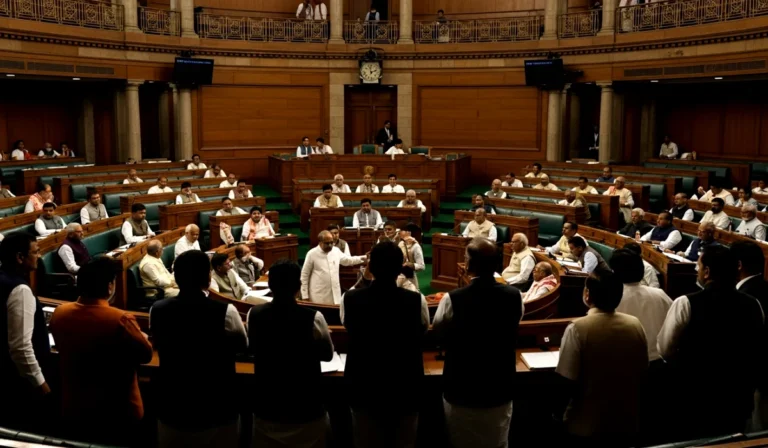
Political watchers say these tensions are becoming common as the Opposition tries to reclaim space in the national conversation. Rahul Gandhi, now more assertive in his role as Leader of Opposition, has been trying to position himself as an alternative voice on India’s global relations. He has regularly spoken about democracy, voices of dissent, and inclusivity, hoping to highlight what he describes as the shrinking space for disagreement under the Modi government.
A senior Congress leader familiar with Gandhi’s interactions told us on condition of anonymity, “Foreign delegations often reach out to us. But recently, we have seen a pattern where they suddenly cancel or say they were advised against political meetings outside the government. It never used to happen like this.” The claim cannot be independently verified, but it reflects what many in the Opposition feel.
If true, it raises serious questions about whether the government is trying to shape how the outside world perceives Indian politics. But supporters of the government argue that India’s diplomatic engagements should not be turned into domestic political battlegrounds. They say the Opposition is reading too much into routine scheduling decisions.
There is also the larger backdrop. Vladimir Putin’s visit comes at a delicate moment for India Russia relations, especially with global tensions surrounding Ukraine and shifting alliances. India has been trying to balance long historic ties with Moscow while also deepening partnerships with the West. Any political drama at home during this visit only adds more noise to an already complex landscape.
For Gandhi, however, the issue is bigger than a single visit. He insists it is about democratic norms. During his briefing, he pointed out how even when Vajpayee was Prime Minister, Opposition leaders were given space to interact with global counterparts. “When India speaks to the world, it must speak as a whole. Not as one man’s voice,” he said.
This message, intentional or not, is likely to resonate with sections of voters who feel political dialogue has become too polarised. On the other hand, the BJP’s core supporters are unlikely to be moved by these allegations. For them, Modi represents authority and stability, and any criticism from Gandhi is dismissed as political bitterness.
As Putin’s visit approaches, the story may continue to gather steam. There is always a possibility that diplomatic sources may weigh in, either confirming or denying the Opposition’s claims. But for now, one thing is clear. The tussle between the government and the Opposition is spilling into every space, including foreign policy.
In the coming days, attention will shift to what Putin discusses with Modi, especially on defence, energy, and trade. But behind the scenes, this argument about diplomatic access may set the stage for a bigger debate on how India presents itself to the rest of the world.
Whether Gandhi gains political mileage from the allegation remains to be seen. Yet his comments have opened up a conversation that will not fade quickly. And in Indian politics, even a conversation can become the spark for the next big clash.