
Tesla’s Shock Move at NeurIPS 2025: Optimus Robot Runs Like a Human and Shows New Lifelike Hands
The Moment Tesla Stole the Show at NeurIPS 2025
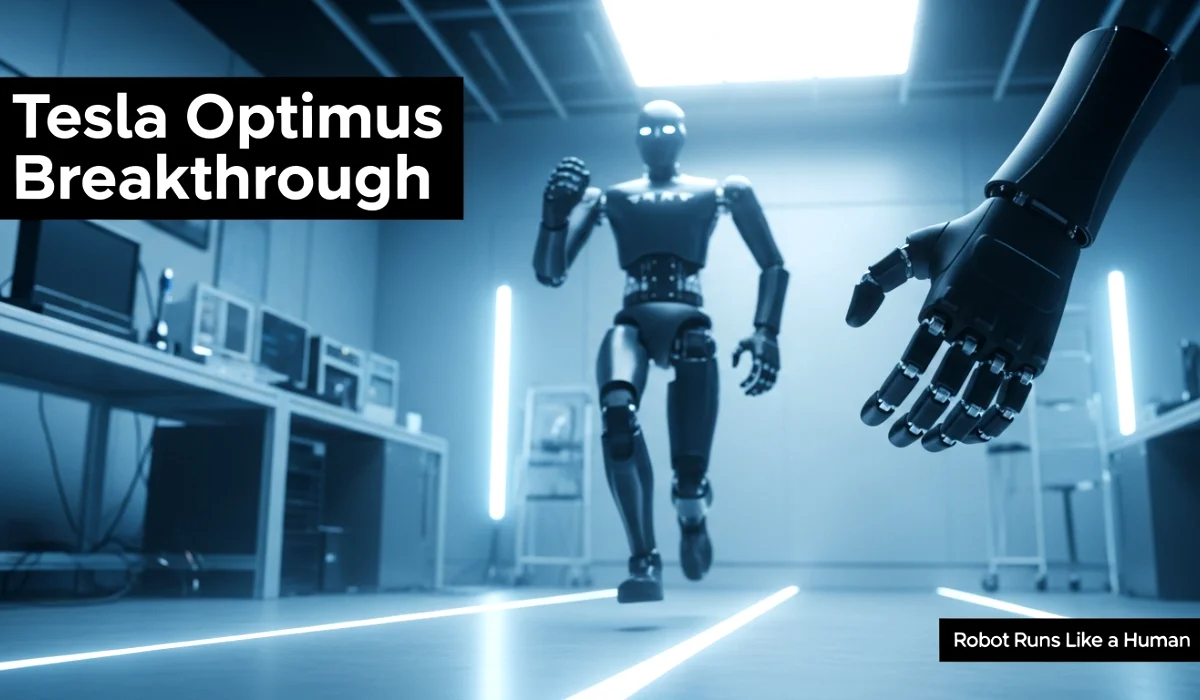
Tech conferences usually bring software demos, research posters and polite applause. But the crowd at NeurIPS 2025 witnessed something that made people sit up straight and forget to blink. Tesla rolled out a brand new demonstration of its Optimus robot. Not only was it walking confidently, it was running across a lab floor with a gait so natural that it made some viewers uncomfortable in the best possible way.
The running video was released publicly on December 2, right as the conference opened. The robot pushed off the ground with both feet leaving the floor for brief moments. Its arms swung like a human preparing for a morning jog. There was rhythm, balance and subtle corrections in every step. For a machine that struggled to take independent steps just a few years ago, this was a massive leap.
A researcher watching from the crowd whispered, “If this is real, robotics is going into a new chapter.” And honestly, that was the vibe across the hall.
Read Also : |Elon Musk On Work |
New Hands With 22 Degrees of Freedom Change Everything
While the running clip grabbed the biggest headlines, the upgraded hands might be the true game changer. Tesla showed Optimus equipped with freshly redesigned hands featuring 22 degrees of freedom. They were wrapped in tight black gloves. But under the fabric, the mechanical fingers flexed, curled and rotated with a surprisingly lifelike smoothness.
Why These Hands Matter
Factories depend on fine motor skills. Picking up small parts, turning tools, holding fragile components and adjusting screws require delicate precision. Robots usually struggle here, but Optimus seemed comfortable with tasks involving fingers, not just arms.
During a small live session, a Tesla engineer handed the robot a soft rubber ball. Optimus rotated it between its fingers, squeezed it gently and passed it from one hand to the other without dropping it. The crowd leaned in as if witnessing a magician’s trick. A student near the front joked, “I have friends with worse coordination than that.”
A Tesla engineer said, “We designed the hands to move with intention. If Optimus has to work with humans, its movement should feel familiar.”
From Awkward Steps to Autonomous Charging
To appreciate the jump, it helps to rewind. In late 2021, Optimus was barely able to walk unassisted. Its first public steps looked like a toddler learning to balance. Critics mocked it. Some called it marketing hype. Others said Tesla was pretending to be in robotics.
But slowly and quietly, progress kept coming.
Milestones That Led to Today
• By mid 2025, Optimus was sorting objects and carrying parts inside Tesla’s factories.
• Months later, the robot showcased autonomous charging, plugging itself in without instructions.
• And now, at NeurIPS 2025, it is running like a trained athlete.
This development pace is unusually fast for robotics. Many academic teams take years to achieve a stable walking model. Tesla, however, has used large data models, sensor fusion and real time feedback to push motion control far ahead of traditional approaches.
What Makes the Running Look So Human
One of the strangest parts of watching the clip was how natural the robot looked. It was not overly stiff or too smooth. It had small imperfections that made the motion believable. Tiny weight shifts, knee bends and arm swings were calculated on the fly using feedback from cameras, torque sensors and joint movement data.
According to Tesla’s description, Optimus does not replay a preset pattern. It calculates every step based on its environment. This mirrors the philosophy behind Tesla’s vehicle autonomy systems, where neural networks learn from massive real world data.
A robotics professor commented, “Robots usually look robotic because they repeat fixed paths. Optimus looks human because it adapts.”
Can Optimus Really Replace Human Labor
This is the big question. Running is impressive, but factories care about consistency, safety and reliability.
The Challenges Ahead
• How long can the robot operate without overheating
• How does it react if multiple robots move in the same area
• What safety protocols exist for mixed human robot environments
• How expensive will large scale deployment be
Tesla believes these problems will be solved step by step. Musk has repeatedly said Optimus could one day become more valuable than Tesla’s car business. That might sound bold, but seeing the progress on display at NeurIPS, it is no longer a far fetched idea.
What This Means for the Future of Robotics
If a robot can run, identify objects, grip tools and operate autonomously, industries across the world may have to rethink how they work. Manufacturing lines, warehouses, agriculture, mining and even home assistance could see massive changes.
A visitor at the event summed it up perfectly. “This feels like watching the early scene of a long story. The plot has barely started, but you can tell it is going somewhere big.”
For now, Optimus has everyone talking. And if Tesla keeps improving the way it has since 2021, the next demo might be something even more unbelievable.






2 Comments